2026 Lexus TX Review
2026 Lexus TX Review: Why This Luxury SUV Beats the Ford Expedition's Tech Mess
MSRP (TX350 AWD): Approximately $58,500
Engine: 2.4L Turbocharged Inline-4
Horsepower and Torque: 275 hp / 317 lb-ft
MPG (Car and Driver): 23 MPG Combined (20 City / 26 Highway)
Guy who did stuff: Yousef Alvi
Photography: Manufacturer
About damn time. I don’t know why it’s so hard for automakers to produce a legitimate, family-sized, three-row luxury crossover. It’s not as if this is some niche, slow-moving market; if anything, it is one of the most sought-after segments in all of autodom. For literally years, the only real players in the three-row luxury crossover space were the Acura MDX and the Audi Q7. Sure, there were other models out there, but they were either panic-engineered—bolting a cramped third row into a chassis that wasn't built for it, like the BMW X5, Mercedes-Benz GLE, or the ill-fated Lexus RX350L—or you were forced to move up to a body-on-frame, money-draining behemoth like the Cadillac Escalade or the Lincoln Navigator.
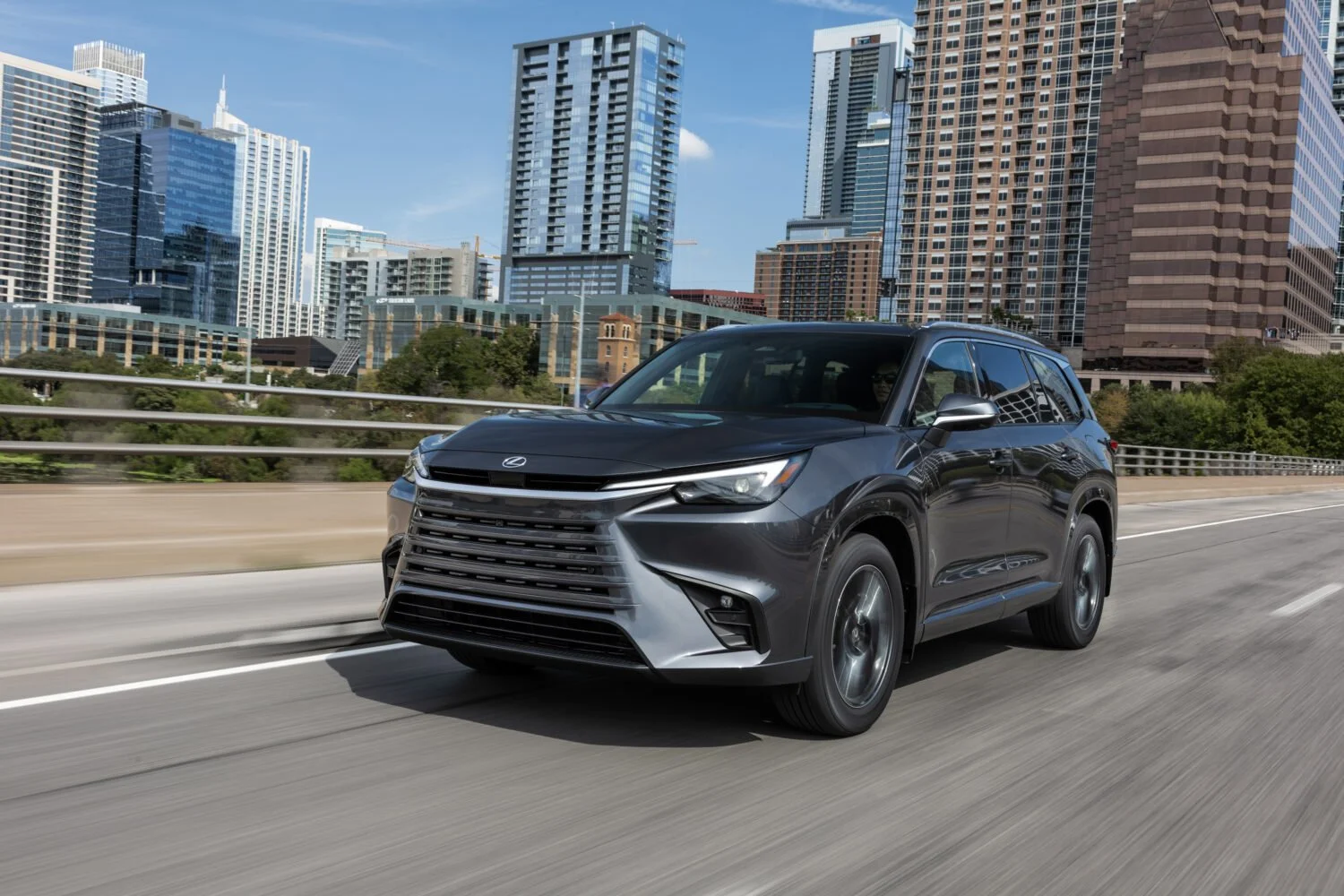
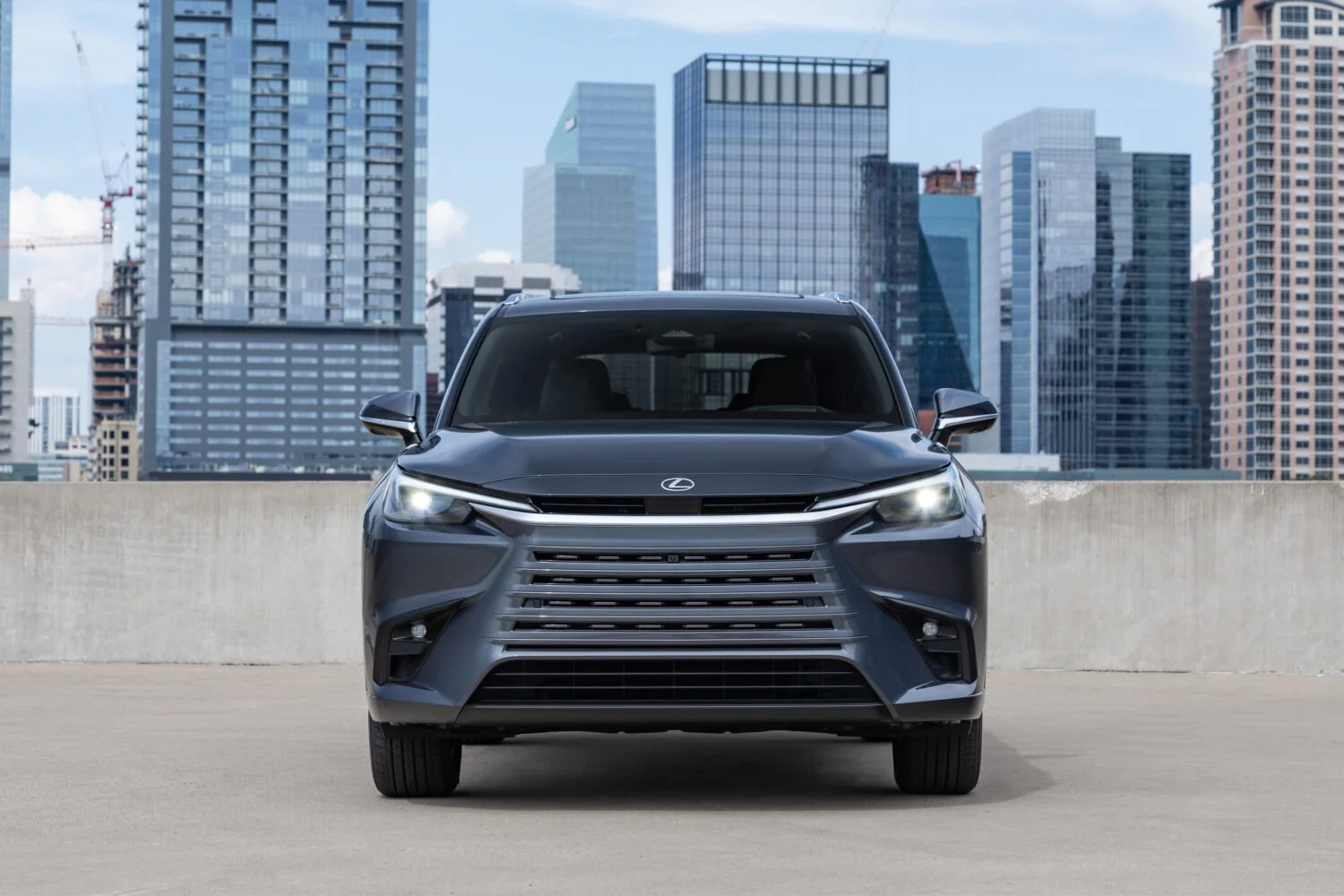
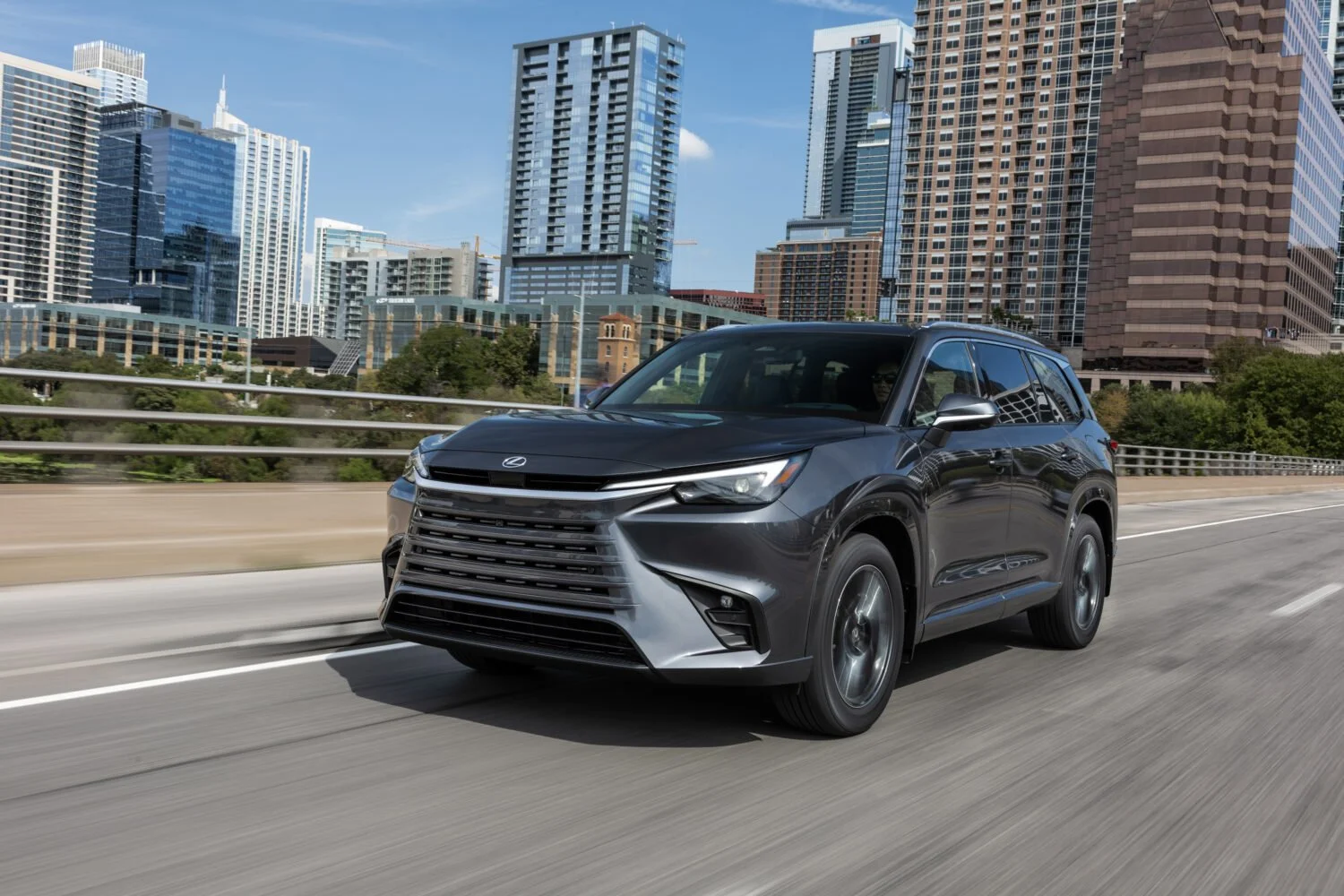
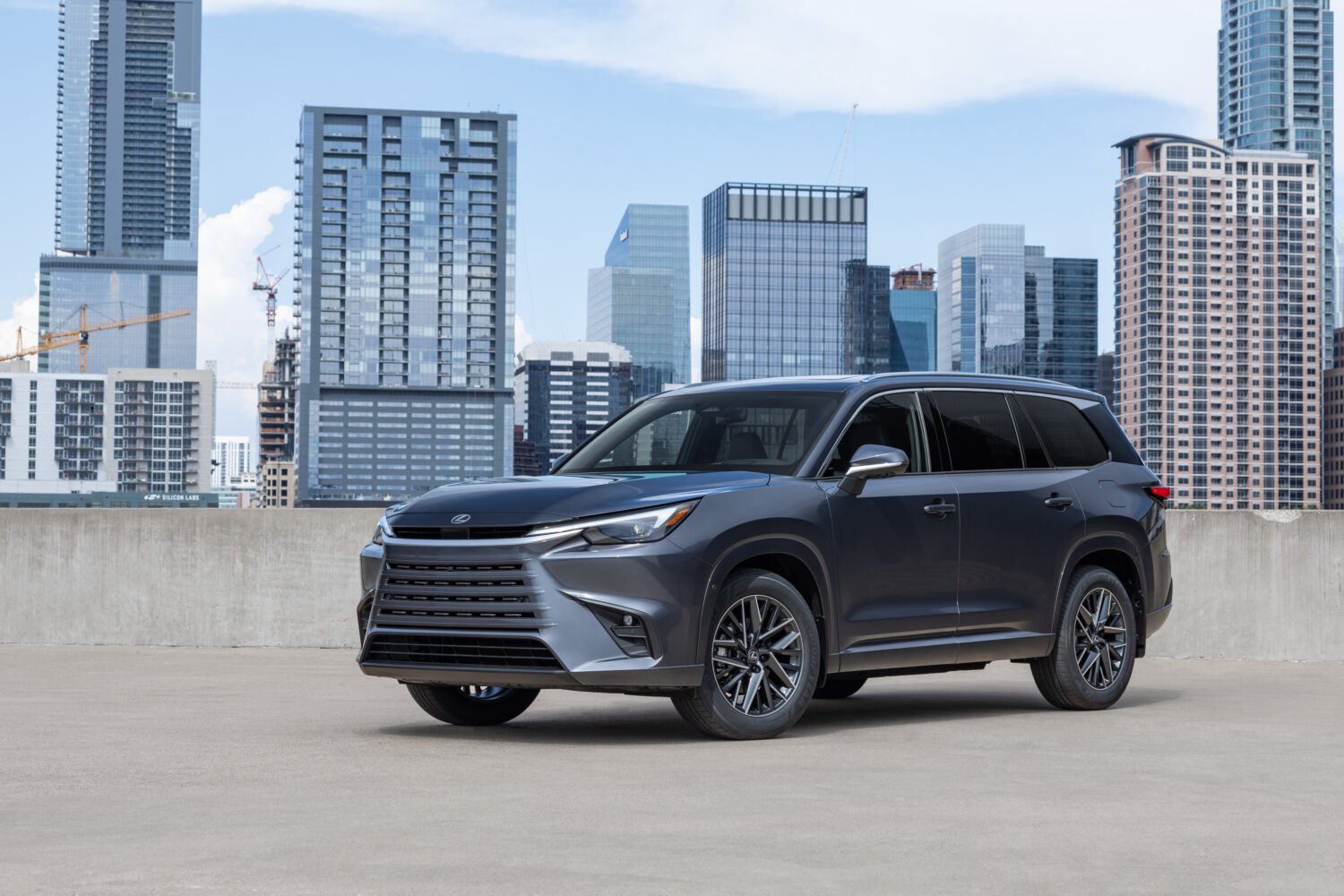
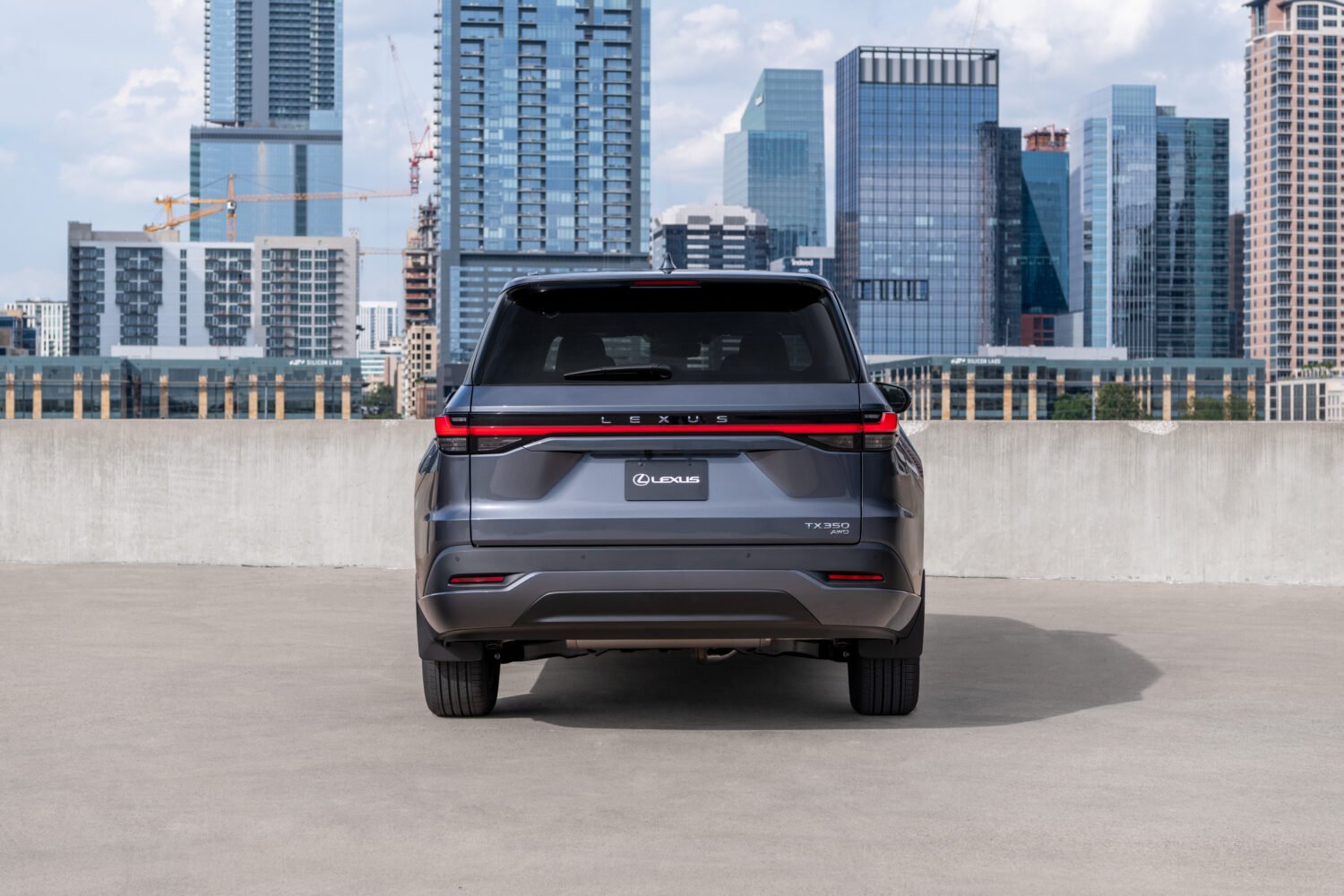
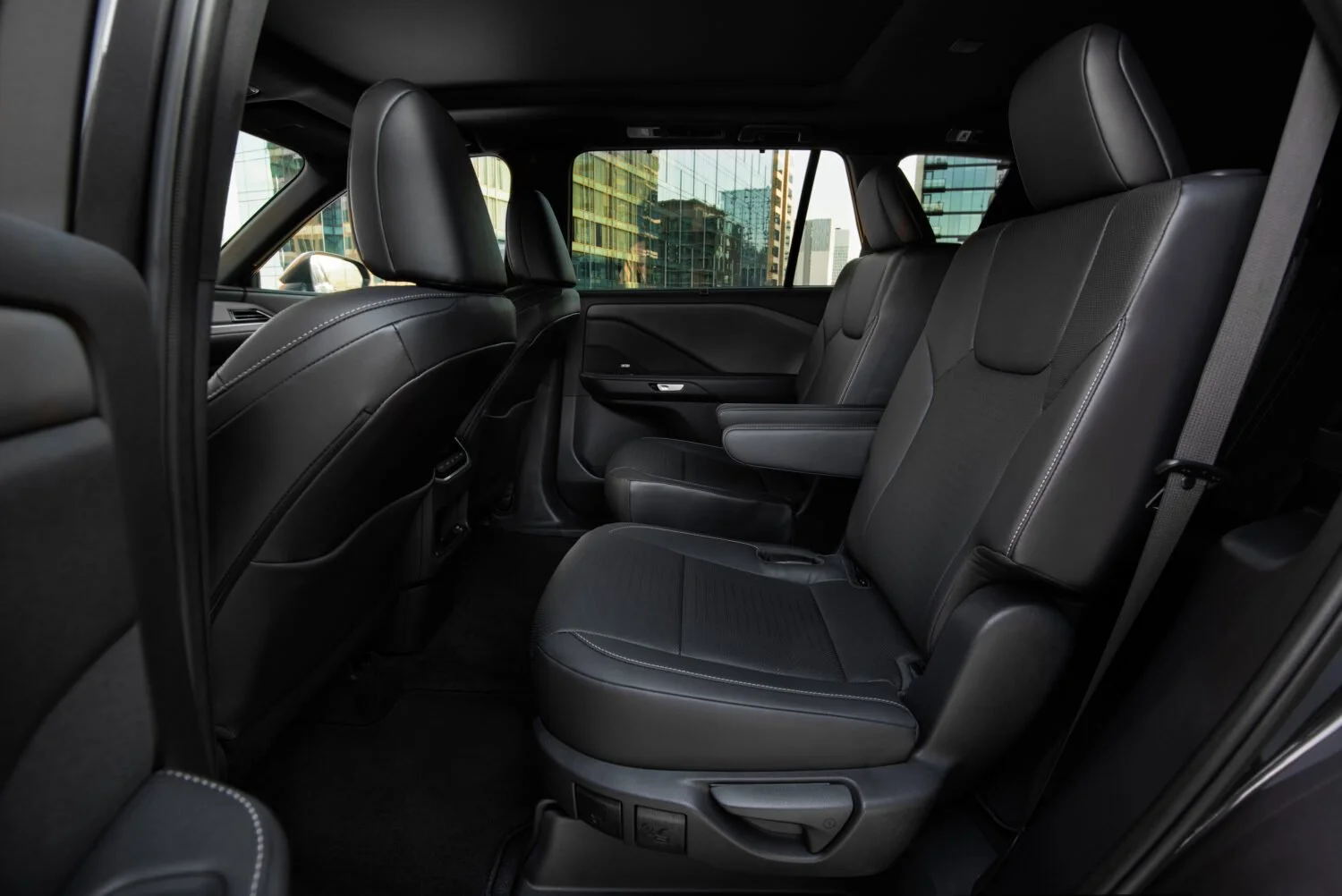
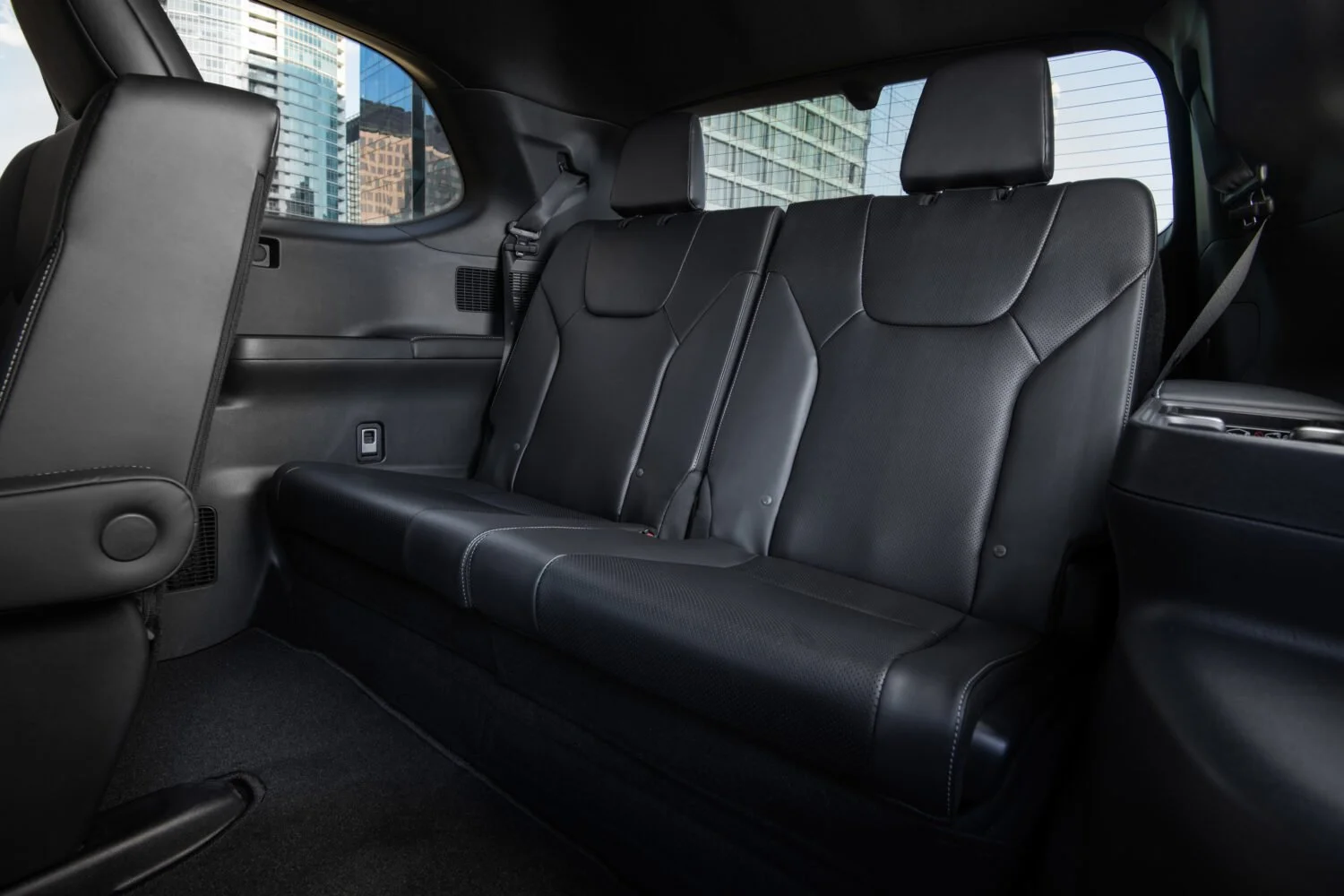
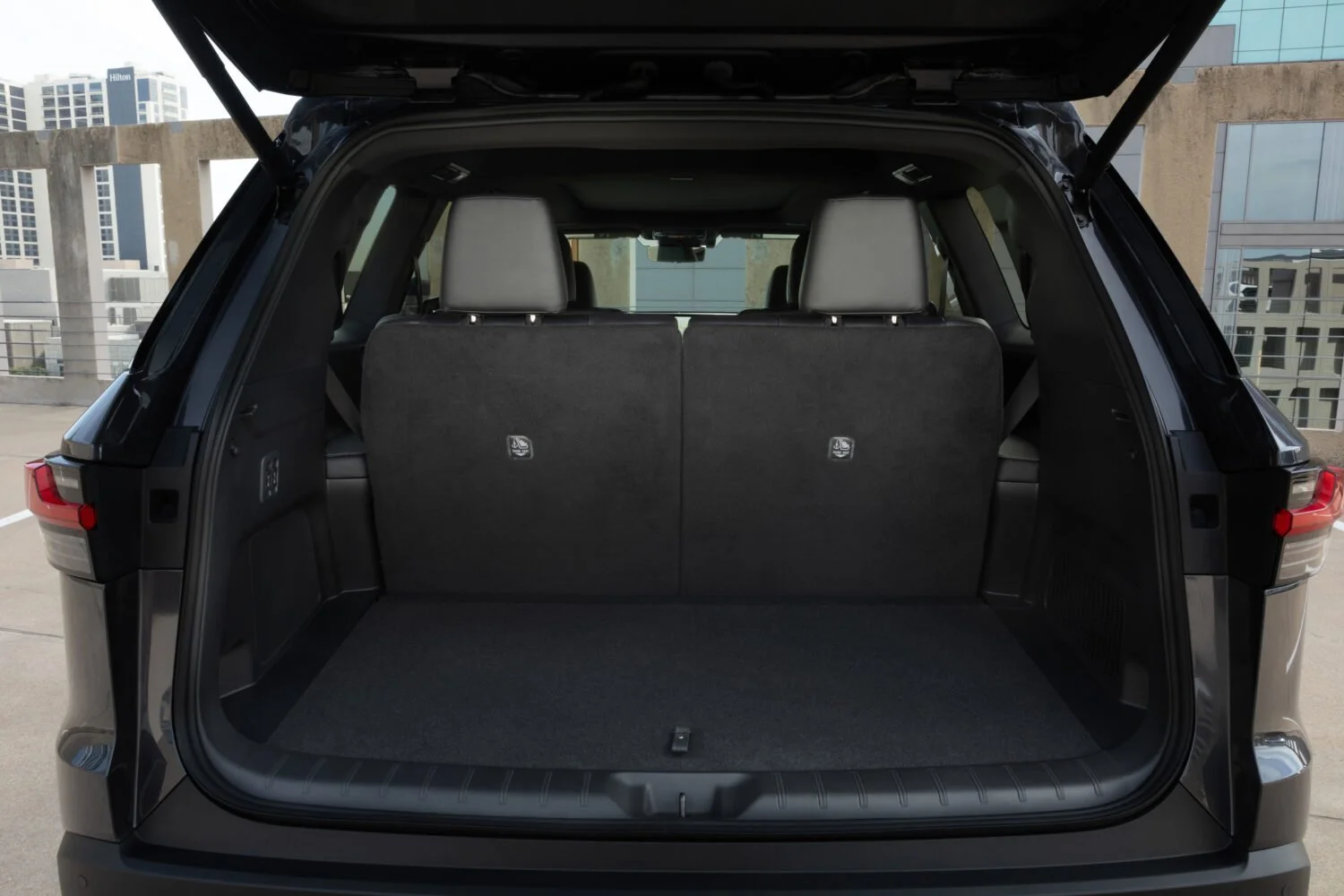
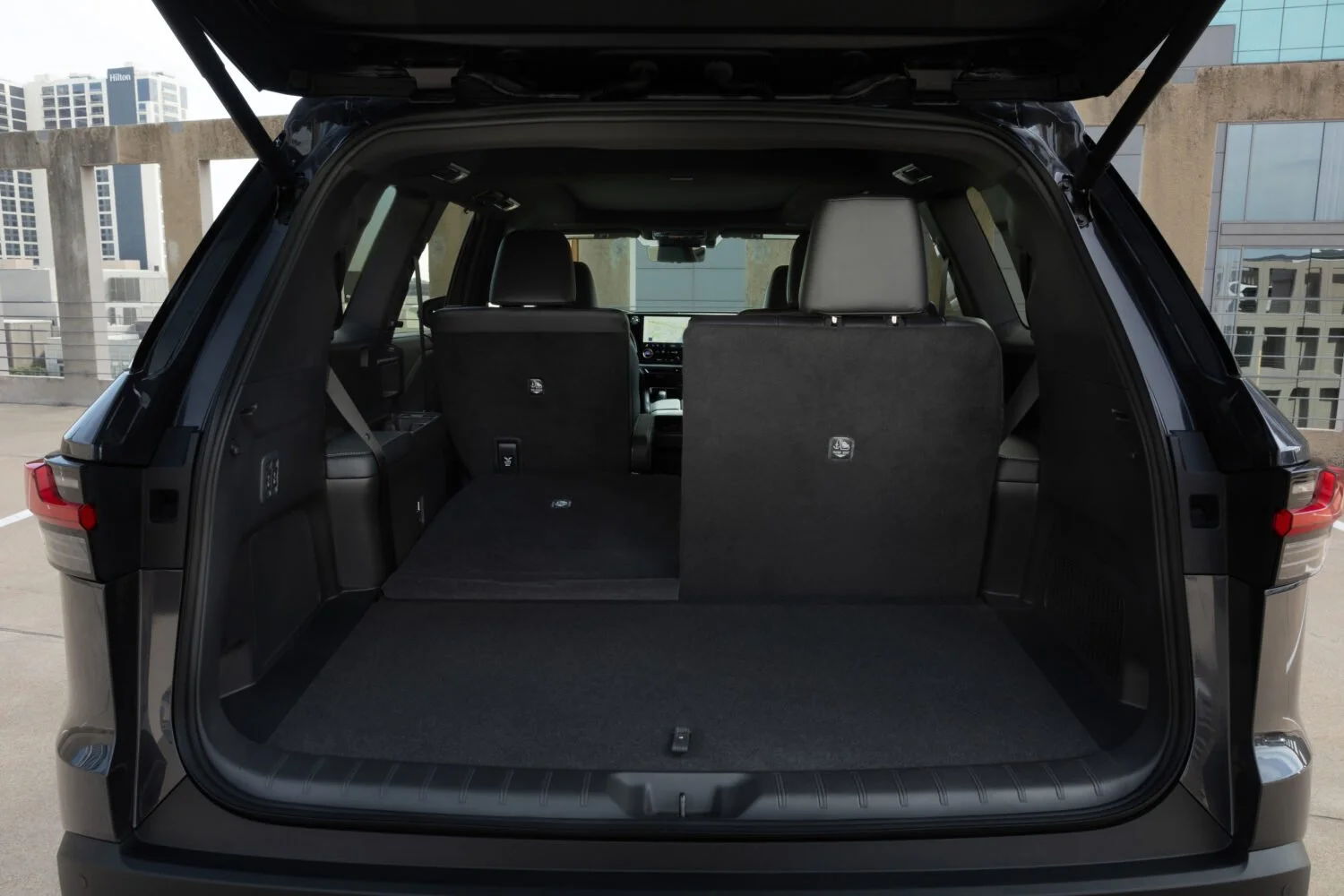
That era is over. What we have here is the 2026 Lexus TX, the first fully realized, built-from-the-ground-up three-row luxury crossover from Lexus. The "ground up" part is the crucial distinction here. Unlike the old RX350L, which was never truly meant to accommodate seven people comfortably, the TX was designed with that third row as a priority, not an afterthought. The result is a vehicle where you have actual, usable legroom in the rear along with one of the largest cargo areas available behind the third row on the market today. The interior volume of the TX is utterly immense, offering a sense of scale that stretches from the premium driver’s cockpit all the way to the very back.
To understand how impressive the packaging is, you have to look at the numbers. Competitors like the Audi Q7 and the BMW X5 offer a meager 14 to 15 cubic feet of cargo room with the third row up. The Lexus TX manages an enormous 20.2 cubic feet! To put that into perspective, the massive 2026 Ford Expedition—a vehicle that looms over most of the parking lot—offers about 22.9 cubic feet of space behind its third row. While the Ford holds a slight edge in raw volume, the fact that this unibody crossover comes within three cubic feet of a heavy-duty truck-based SUV is a testament to Lexus's engineering.
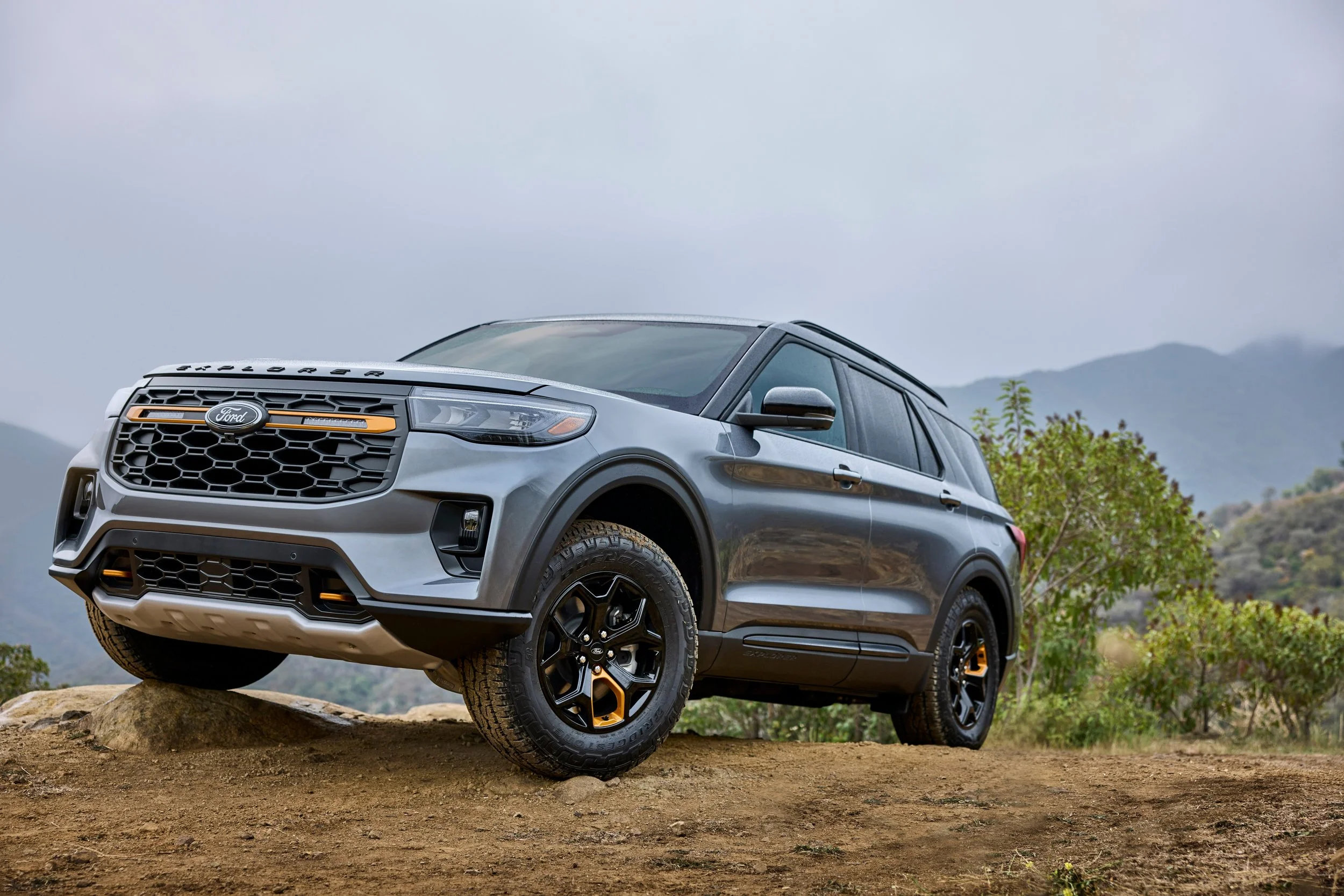
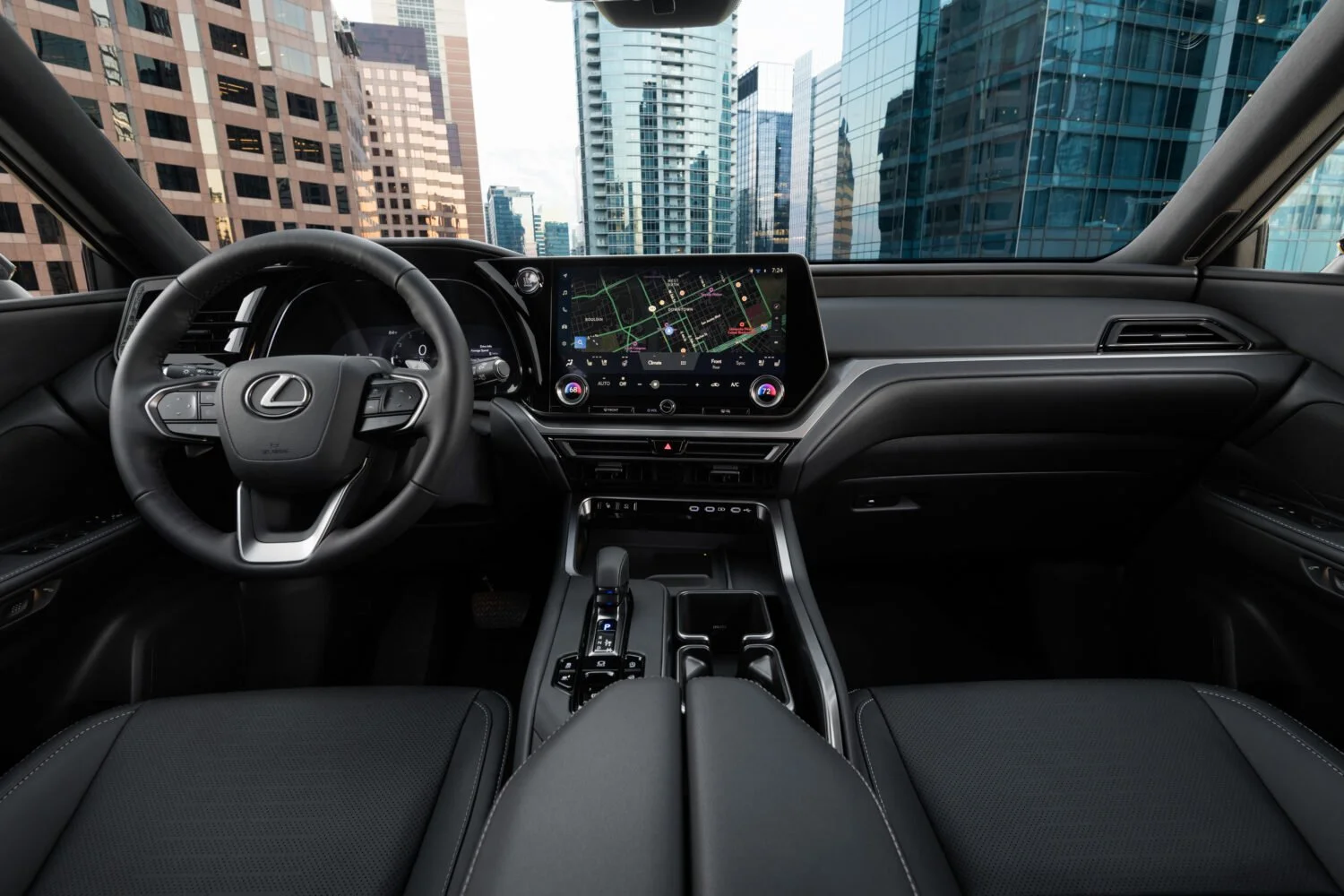
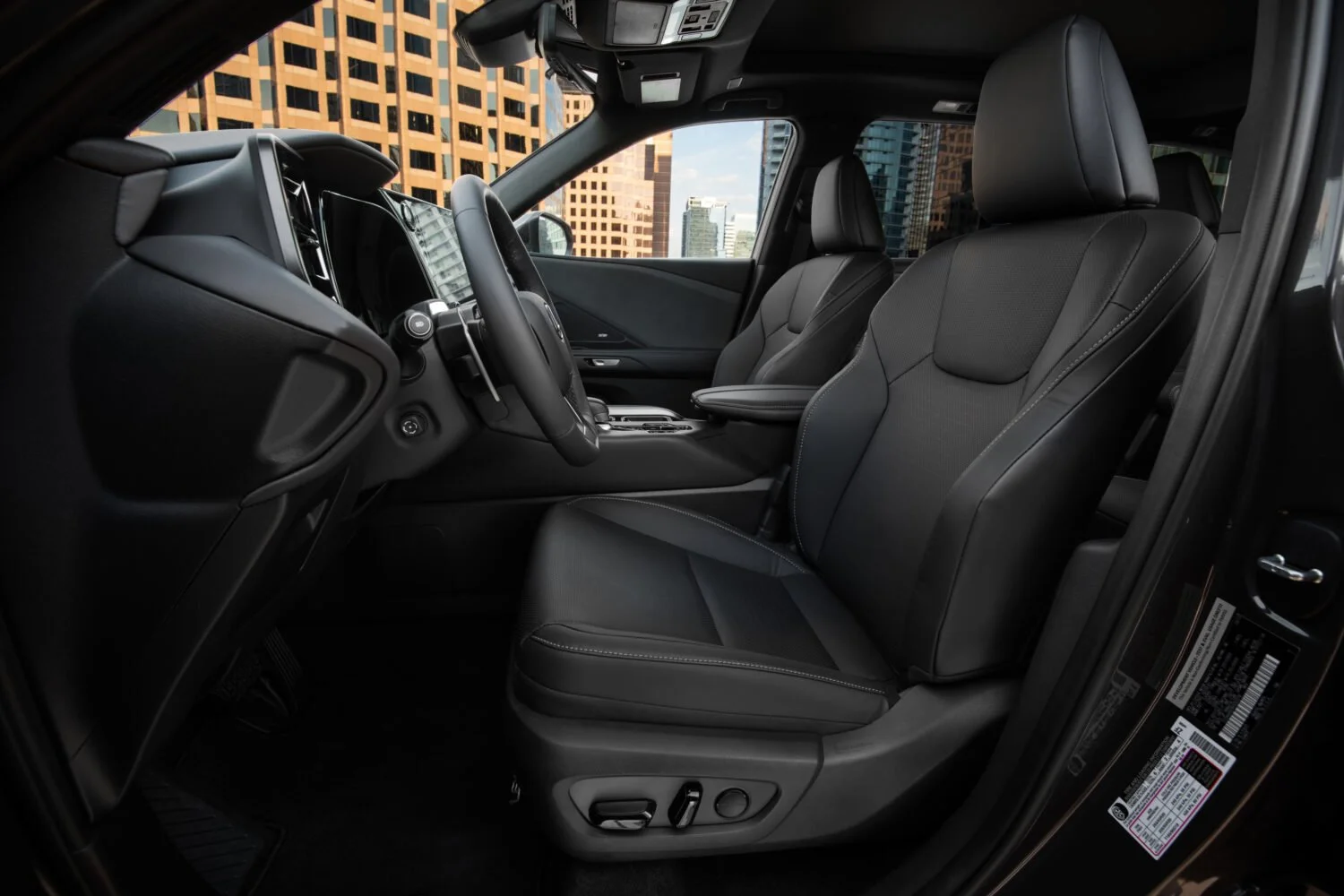
Beyond the raw dimensions, there is the matter of actually living with the thing. While other automakers are shoving tech into cabins without a single thought in the world, the Toyota Motor Corporation has clearly kept the driver in mind with the TX. Stepping into the Ford Expedition reveals an inundation of tech that has become a relative mess; it centers around a massive 24-inch panoramic display that feels more like a gimmick-filled billboard than a dashboard. It’s distracting, cumbersome, and forces you to navigate a dizzying array of screens and sub-menus just to handle basic tasks. In contrast, the Lexus TX is a masterclass in "get in and drive" simplicity. Its 14-inch Interface system is advanced yet incredibly intuitive, keeping the controls exactly where you expect them to be. Lexus has prioritized ergonomics over flashy tricks, ensuring you aren't hunting through three layers of digital menus just to adjust your seat heaters; you’re simply driving.
I’m not being overly dramatic here. While the TX350 is the clear value trim level to buy for most families, to directly compare it to the brute force of something like the Expedition, we really need to step up to the TX500h F Sport Performance. Let’s break down the specs on both to see how they actually compare in the real world. The most commonly purchased configuration for the Expedition features the 3.5-liter EcoBoost V6, which produces 400 horsepower and 480 lb-ft of torque. Our Lexus TX500h comparison unit features a sophisticated 2.4-liter turbocharged hybrid powertrain making 366 horsepower and a stout 406 lb-ft of torque. While the Ford maintains a peak power advantage on paper, the hybrid’s instant electric torque makes the Lexus feel far more responsive in real-world scenarios.
The Lexus delivers its power with a level of electrification-fueled immediacy that the Expedition’s turbo V6 simply cannot match. While the Ford is a towing powerhouse, it carries a massive weight penalty, tipping the scales at over 5,500 pounds. In daily driving—sprinting between stoplights or navigating tight suburban traffic—the Lexus TX feels significantly more agile, especially in 500h trim which utilizes standard rear-wheel steering to shrink the vehicle around you, whereas the Ford's truck-based architecture always reminds you of its sheer mass.
The performance data highlights the trade-offs of going "big." In a sprint to 60 mph, the Expedition utilizes its twin-turbo V6 to hit the mark in about 6.9 seconds. The TX500h leaves the truck in the dust, hitting 60 mph in a blistering 6.1 seconds, while even the base TX350 stays surprisingly competitive at 7.8 seconds. When it comes to stopping and turning, the laws of physics favor the Lexus even more heavily. Pulling to a stop from 60 mph, the Lexus TX requires only 122-124 feet, while the much heavier Ford needs closer to 135 feet. Handling is more of the same; on the skidpad, the Lexus remains composed with up to 0.84g of lateral grip, while the Expedition’s high center of gravity results in a more ship-like 0.73g.
The final nail in the coffin for the traditional full-size SUV is fuel efficiency. The Expedition, even with its modern turbo V6, struggles to return more than 18 or 19 MPG in combined driving. Our Lexus TX? Even in its base non-hybrid 350 form, it averages a palatable 23 MPG combined, while the 500h hits a remarkable 27 MPG. Over five years of ownership, that efficiency gap represents a massive savings in both time at the pump and money in your pocket.
So, what do you actually gain by choosing the Ford? Unless you are towing a 9,000-pound trailer every weekend, the answer is "nothing." The Lexus TX offers a significantly more refined interior, a quieter cabin, and a ride quality that doesn't shudder over every pothole. It is nearly as spacious inside, far easier to park, and lightyears more efficient.
The TX isn't just a new model; it's a correction of a long-standing market oversight. It proves you don't need a heavy, truck-based frame to haul a family with genuine performance and luxury. The question you should be asking yourself isn't whether the TX is big enough—it's why in the hell would you deal with the bulk and the thirst of an Expedition when you can have this instead?
Yousef Alvi